
AI & Technology
Featured Essays

You can call it a response to Matthew Harvey Sanders.

Magisterium AI—the Catholic chatbot that Sanders characterizes as a paver on “the Golden Path”—is bad.

The chatbot, by virtue of being designed to appear human, appears sexual—male or female.

For heaven’s sake—someone had to throw a first punch.

I have been patronizing my dishwasher. I have been subsidizing its efforts.
Podcasts
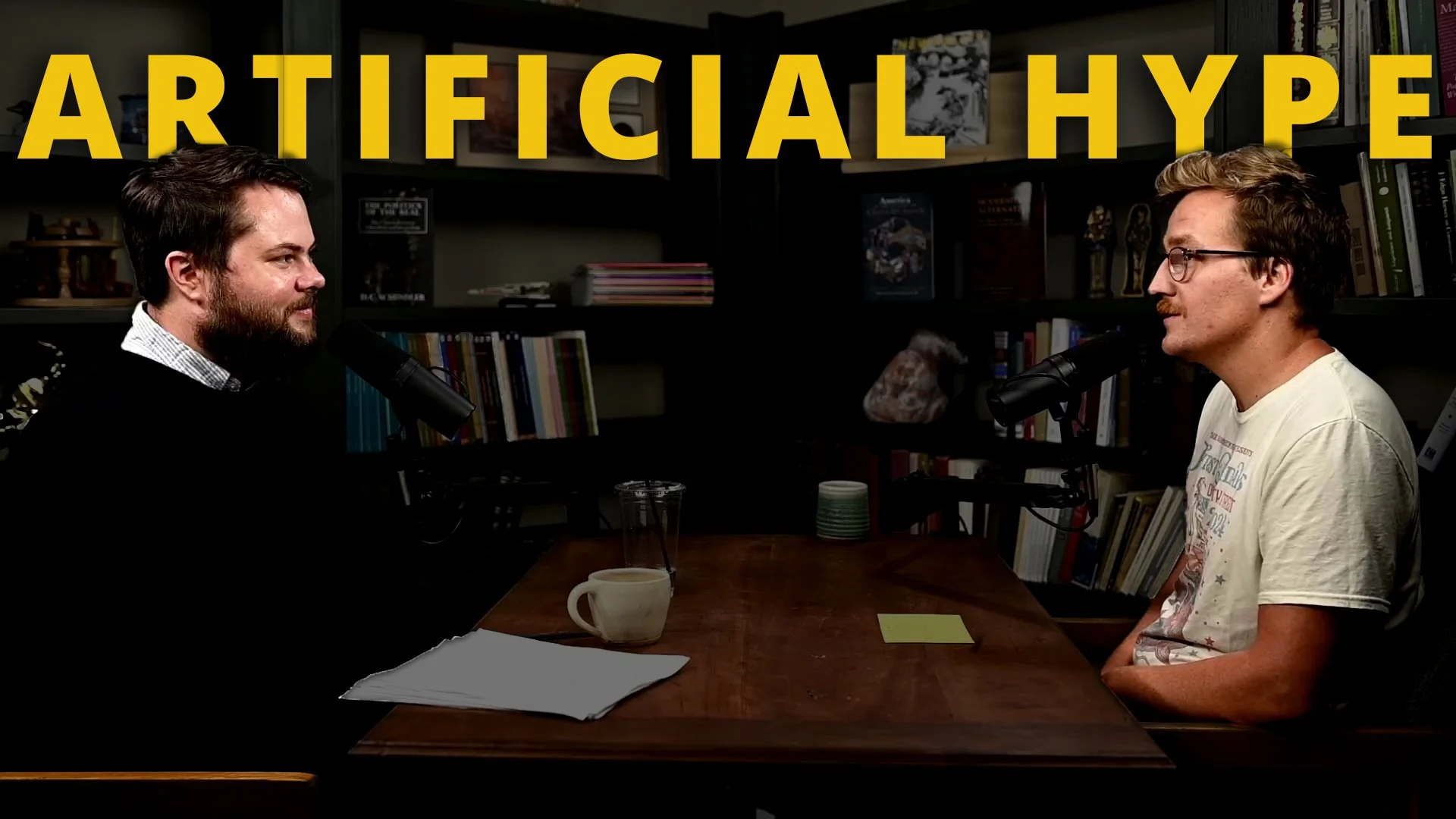
Marc Barnes and Alex Denley are happy to announce the next New Polity Magazine, Issue 7.3, on AI: The Hype vs The Real. In this podcast, they discuss the loss of textual communities, AI generated homilies, the technocratic paradigm, and other topics from the new magazine.
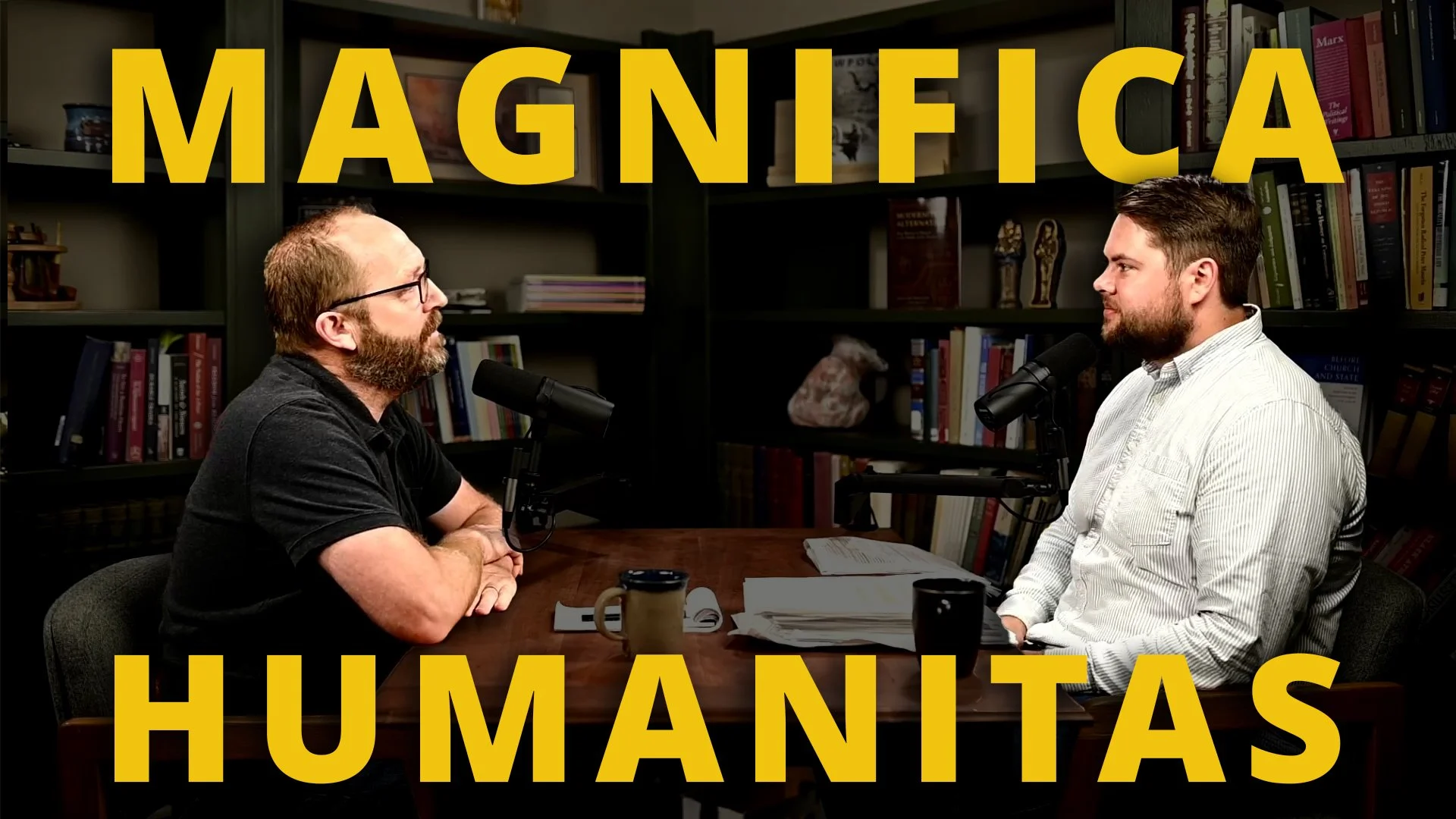
Magnifica Humanitas has been called the "AI Encyclical," but there's far more to the document: a thorough analysis of Catholic Social Doctrine, an extensive treatment of modern warfare, and how power works in the world today. In this podcast, Alex Denley and Andrew Willard Jones discuss the political philosophy of Magnifica Humanitas, and how the Pope's analysis helps us to understand our future with AI, how the powerful will use it, and what we as Christians can do about it.
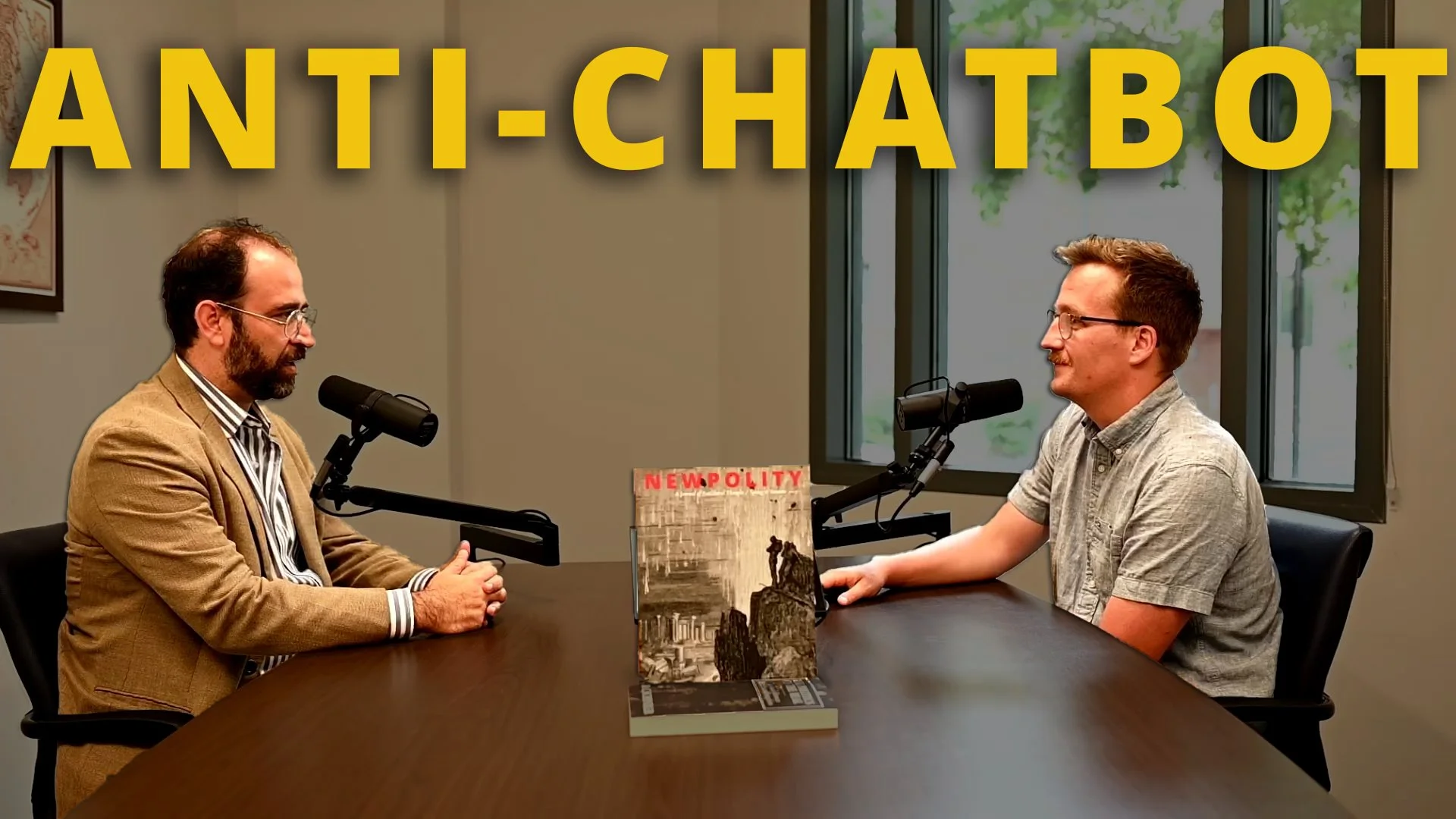
The anti-chatbot alliance is growing. With support from the Future of Life Institute, New Polity is hosting a landmark event on AI next spring in Pittsburgh, bringing together leading Catholic organizations and thinkers to discuss, debate, and chart a path for our world with AI. Event details and tickets will be available in July. In this podcast, Marc Barnes interviews participants at the Future of Life event in Washington D.C. on their projects, thinking on AI, and how an anti-chatbot alliance can be formed.
In this podcast, Matthew Harvey Sanders, CEO of Longbeard (creator of MagisteriumAI), and Marc Barnes, editor of New Polity, debate whether Catholics should build and use AI chatbots. Barnes argues that Catholic AI chatbots are objectively evil because they generate probabilistic statements about the faith, are irresponsible in their responses, and are inherently fake conversations with non-persons. Sanders argues that Catholics should embrace this new technological development and that there is an openness from the Vatican about the creation of a true artificial intelligence. This debate is hosted by Edmund Mitchell of the Faith and AI Project.
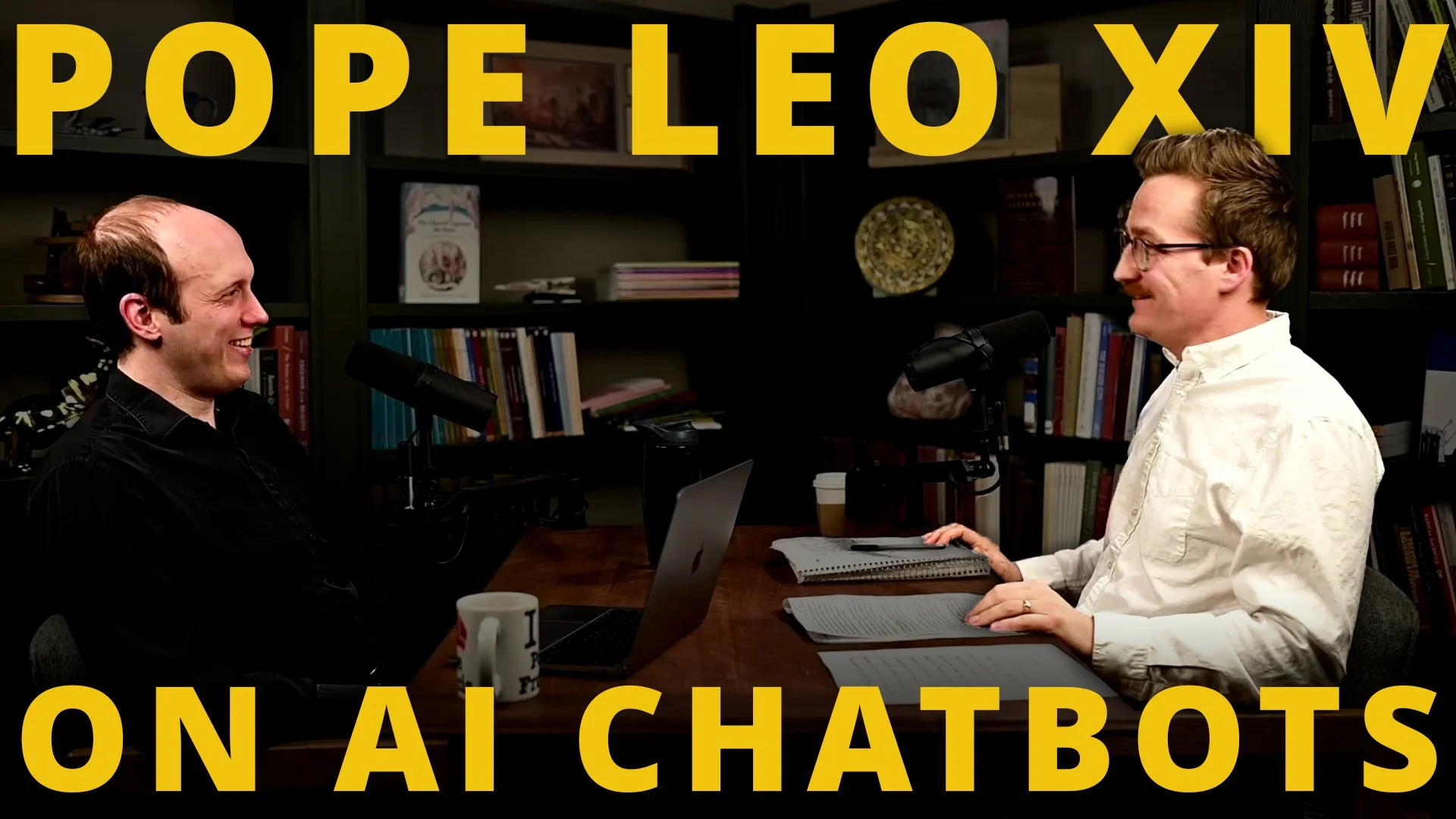
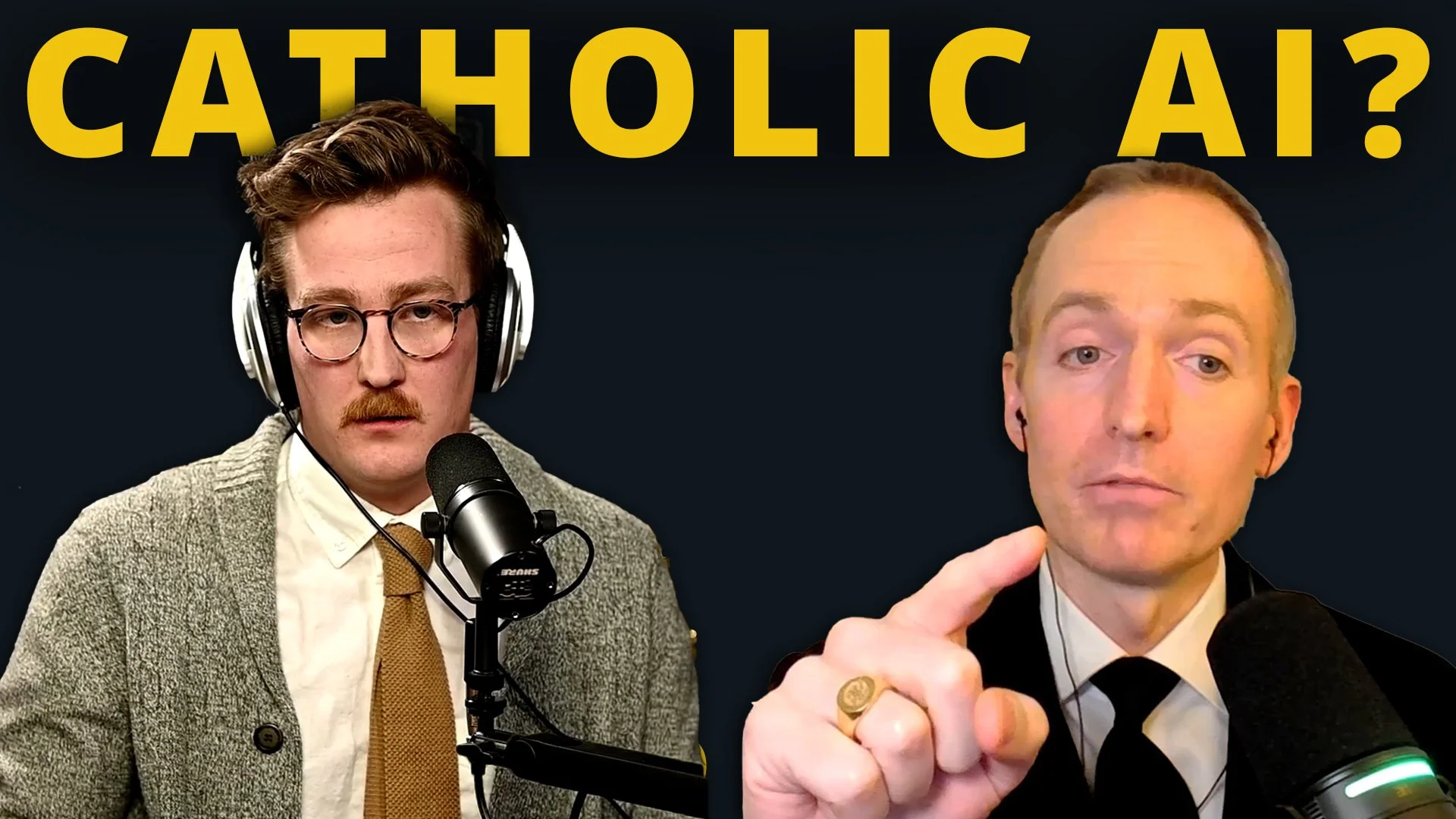
What is the Catholic response to AI? Pope Leo XIV, in his recent message for the 60th World Day of Social Communications, takes a critical look at AI: namely, how it is "encroach[ing] upon the deepest level of communication, that of human relationships." Pope Leo asserts that our faces and voices are sacred, a witness to the unique, singular dignity of each human person. With AI already mimicking persons in social media and through deepfakes, the Pope calls for overcoming the "anthropomorphizing tendencies of AI systems." In this podcast, Marc Barnes and Reuben Slife go line-by-line through the message of Pope Leo, and discuss its implications for the Catholic approach to AI.
The book has long been the place of completed thought, able to incorporate previous work and advance new thought. That is going away. AI generation is polluting the discourse; leading to a state where all "new" publications are, in fact, summarized AI restatements of the previous state of the question. In this podcast, Marc Barnes and Andrew Willard Jones discuss the effects of AI on the the technology of the books, and how a literate culture persists.
All Technology Essays
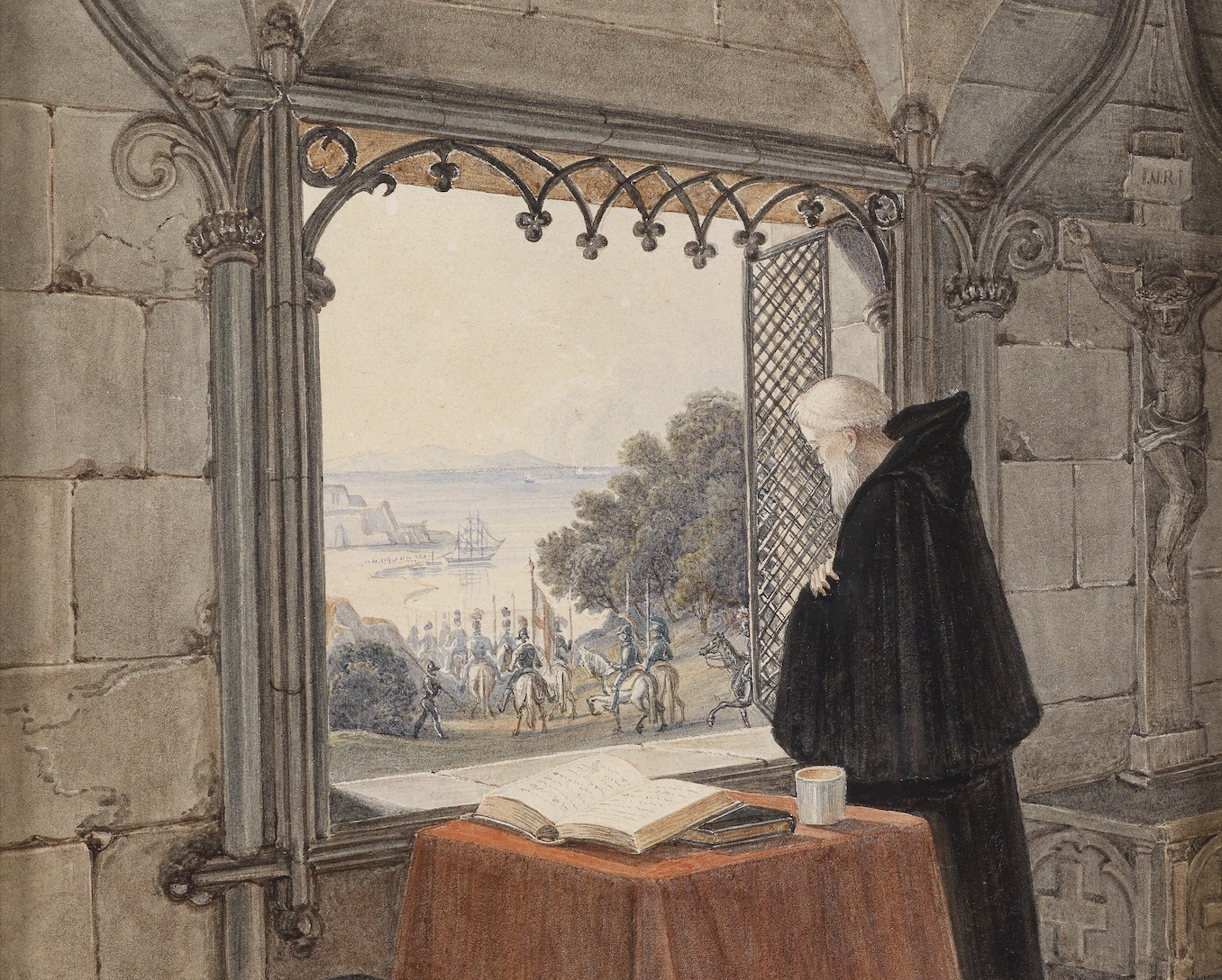
Would the slogan of Generative AI be ora non labora, pray but do not work?
The desire for subcreation echoes, but out of sync with the master of the cosmos.

The future is always worse than you think it’s going to be.
Slavoj Žižek wonders how, if at all, can we—humanity—avoid being filtered?
Tech is made for the 99% by the 1%.

We have a new magazine for you.

Getting dunked on by the Pope.

Bringing the dead back to life.
Gone are the days of the misspelling mail-order bride and au revoir, sweet Nigerian prince.
You can call it a response to Matthew Harvey Sanders.
Magisterium AI—the Catholic chatbot that Sanders characterizes as a paver on “the Golden Path”—is bad.

Marc Barnes mistakes a call for prudence with a call for prohibition.
The chatbot, by virtue of being designed to appear human, appears sexual—male or female.

Have they been exiled? No—they are camping.
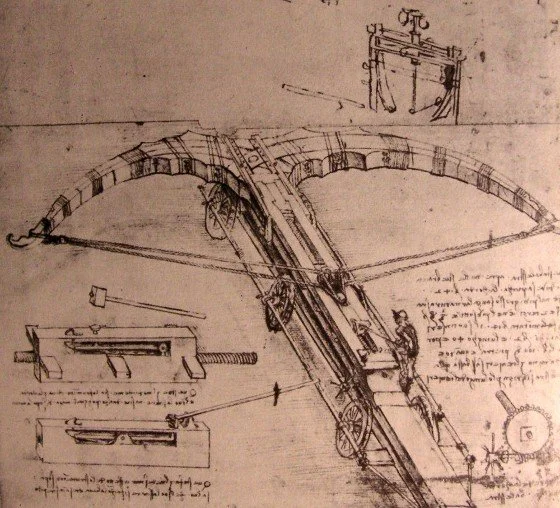
On the blurring of human and artificial intelligence

It is useful for the rulers of the earth to play at ruling the air.

A new king has arrived—and we’ve given him the crown.
For heaven’s sake—someone had to throw a first punch.
I have been patronizing my dishwasher. I have been subsidizing its efforts.

Social media is a machine for the universalization of Posting, such that all human communication becomes a Post in its exterior form, regardless of the interior intention of the poster.

The real reformers, the ones who are most agitated about a problem, often gain their energy from the moral contradiction of being utterly implicated in the very sins they condemn.

The trouble with driving, according to Crawford, is that there isn’t enough of it.

Artificial intelligence is not a new frontier for man, but one of the oldest.

Love and truth are neither expected nor (typically) desired from bureaucrats or chatbots.

The trouble with a technological age is that people are increasingly shapeless.

We will either become Catholic or remain counterproductive.

The transhumanist attempts, through innovative technology, to postpone or overcome biological fragility and curate a kind of eternal body.

Plastic “makes” a thing present to all and yet seals it within itself, which is of course, the liberal description of the self.

The humanists are inhuman, but let us not be taken for fools: their “philosophy” is more materially determined by the stock market than spiritually determined by any insight into the human condition.
All Technology Podcasts
Marc Barnes and Alex Denley are happy to announce the next New Polity Magazine, Issue 7.3, on AI: The Hype vs The Real. In this podcast, they discuss the loss of textual communities, AI generated homilies, the technocratic paradigm, and other topics from the new magazine.
Marc Barnes and Joe Heschmeyer are from the old world of the Catholic blogosphere. With catchy titles like "Bad Catholic" and "Shameless Popery," the Catholic blogs were the place for long comment threads and an active community. Social media has made that community mostly obsolete, and social media is the default place where people go. In this podcast, they discuss producing content for social media algorithms and how to preserve and encourage attention.
Magnifica Humanitas has been called the "AI Encyclical," but there's far more to the document: a thorough analysis of Catholic Social Doctrine, an extensive treatment of modern warfare, and how power works in the world today. In this podcast, Alex Denley and Andrew Willard Jones discuss the political philosophy of Magnifica Humanitas, and how the Pope's analysis helps us to understand our future with AI, how the powerful will use it, and what we as Christians can do about it.
The anti-chatbot alliance is growing. With support from the Future of Life Institute, New Polity is hosting a landmark event on AI next spring in Pittsburgh, bringing together leading Catholic organizations and thinkers to discuss, debate, and chart a path for our world with AI. Event details and tickets will be available in July. In this podcast, Marc Barnes interviews participants at the Future of Life event in Washington D.C. on their projects, thinking on AI, and how an anti-chatbot alliance can be formed.
In this podcast, Matthew Harvey Sanders, CEO of Longbeard (creator of MagisteriumAI), and Marc Barnes, editor of New Polity, debate whether Catholics should build and use AI chatbots. Barnes argues that Catholic AI chatbots are objectively evil because they generate probabilistic statements about the faith, are irresponsible in their responses, and are inherently fake conversations with non-persons. Sanders argues that Catholics should embrace this new technological development and that there is an openness from the Vatican about the creation of a true artificial intelligence. This debate is hosted by Edmund Mitchell of the Faith and AI Project.
What is the Catholic response to AI? Pope Leo XIV, in his recent message for the 60th World Day of Social Communications, takes a critical look at AI: namely, how it is "encroach[ing] upon the deepest level of communication, that of human relationships." Pope Leo asserts that our faces and voices are sacred, a witness to the unique, singular dignity of each human person. With AI already mimicking persons in social media and through deepfakes, the Pope calls for overcoming the "anthropomorphizing tendencies of AI systems." In this podcast, Marc Barnes and Reuben Slife go line-by-line through the message of Pope Leo, and discuss its implications for the Catholic approach to AI.
The book has long been the place of completed thought, able to incorporate previous work and advance new thought. That is going away. AI generation is polluting the discourse; leading to a state where all "new" publications are, in fact, summarized AI restatements of the previous state of the question. In this podcast, Marc Barnes and Andrew Willard Jones discuss the effects of AI on the the technology of the books, and how a literate culture persists.

Marc Barnes believes that AI chatbots are evil, and that having a faux conversation with AI chatbots is wrong. Joseph Hobbs, Senior Solution Architect at Databricks, disagrees. In this podcast, they discuss the nature of conversation, how AI imitates conversation, and the Catholic response to AI Chatbots.

In this podcast, Alex Denley and Marc Barnes discuss the upcoming New Polity magazine on AI, the Church's social teaching on technocracy and the technocratic paradigm, and the Christian response to Artificial Intelligence.

Technology has given an untrained humanity unprecedented power over itself. Peter Berkman, following Marshall McLuhan and Romano Guardini, argues that he "digital world" has rapidly replaced other modes of human interaction, and AI presents a rapid acceleration of that movement. In this podcast, Marc Barnes and Peter Berkman discuss this development and the Christian response.

We are happy to announce the next issue of New Polity Magazine, dedicated specifically to Artificial Intelligence! Featuring essays by Matthew Crawford, Slavoj Žižek, D. C. Schindler, Michael Hanby, Andrew Willard Jones, and many more. Subscribe by October 1st to receive this issue! Alex Denley and Marc Barnes discuss the Christian response to AI, how to safeguard human freedom, and AI as a new industrial revolution.

The development and use of AI chatbots has grown massively. With hundreds of millions of users, OpenAI, XAI, Claude AI, and others have become a normal part of many people's day. Some Christians have an uneasy attitude toward the use of AI Chatbots, while others are supportive and have developed their own. In this podcast, Marc Barnes and Alex Denley discuss the moral question: whether Christians should use AI chatbots, and the ramifications that it has on human nature.

At the 2024 New Polity conference, Matthew B. Crawford gave the keynote address in which he contrasted the view of man inherent in technocratic rationalism with that of a Christian view. Drawing from the work of Joseph Ratzinger and Michael Oakeshott, Crawford draws a distinction between an orientation toward receiving life as gift and cramped rationalism that views man as an object to be synthetically remade. The current push for technocratic control over every sphere of life collapses the vertical order of reality and aims to eliminate contingency, risk, and play. In contrast, one who affirms the inherent goodness of being is able to experience a real vitality of life in a meaningful world.
Are we headed to a grand and glorious technological future? In this talk, Andrew Willard Jones expects the opposite: "The Future is Always Worse Than You Think It Will Be." As he explains, there are two paths with the development on new technologies: one which leads to an extension of the humane world into greater areas, and another, the technocratic, which closes and mines the world from within.

Announcing the 4th Annual New Polity Conference, Should We, Therefore, Destroy the Servers? In this podcast, Marc Barnes, Jacob Imam, and Andrew Jones discuss the role of technology on our lives, the pursuit of a technology for power, and how Christians should approach technology.
Check out our lineup of speakers and register here https://newpolity.com/events/2024


Marc Barnes discusses with Shawn and Beth Dougherty the illegality of raw milk as a spiritual sign of the times.

Marc and the Dougherty's discuss how and why to start a compost pile: it restores fertility to the soil and makes you a shepherd of death.
(Our apologies for the funky audio!)

In 2021, Gladden Pappin came to the New Polity conference to let us know that our obsession with technology is silly—not only because we have ceased inventing truly novel innovations, but also because those who are producing it are actually enslaving us. So buckle up and enjoy the talk!

We are excited to announce the College of St. Joseph the Worker. Mike Sullivan, Jacob Imam, Marc Barnes, and Andrew Willard Jones talk us through it.

Tyranny makes fear the basis of a social order, and technology promises to assuage that fear. Learn about the technology of tyranny from Andrew Willard Jones and Marc Barnes.

Money makes you more predictable, less creative, and more controllable. Surprise, surprise, Marc Barnes and Jacob Imam still don't like money. But they give you some ideas on how to use it to become more free, creative, and virtuous.
Get the Magazine
New Polity Magazine aims to deconstruct the keywords and categories of liberalism and reconstruct them according to the logic of Christianity. Get the latest issue and access to our archives.
Bringing the dead back to life.