
Catholic Social Teaching Masterclass
June 21-24, 2027
Steubenville, OH 43952
You’ve wanted to delve deeper into the social doctrine of the Church—subsidiarity, the just wage, the preferential option for the poor.
You've wanted to apply Catholic social teaching to your business, your neighborhood, to the way you spend money, raise children, and participate in politics.
We’re offering a masterclass in order to study and illuminate the Church's social doctrine: those grace-filled principles by which you fulfill your Christian vocation to transform the world into the kingdom of God.
Come to Steubenville, Ohio for a week with leading teachers, philosophers, and theologians dedicated to sharing the Church's vision of a Christian social order and kindling our desire to be fruitful laborers in the vineyard of the Lord.
This course is offered in collaboration with the College of St. Joseph the Worker. If you would like to receive college credits for the course, please email us for an assessment at info@collegeofstjoseph.com.
Learn more about the masterclass and the course teachers below.
Price includes Lodging for the duration of the Masterclass.
Registration is limited.
Questions? Please email us at cs@newpolity.com
Would you like to sponsor a priest, seminarian, or student? Please contact us cs@newpolity.com

Andrew Willard Jones holds a PhD in Medieval History from Saint Louis University with a focus on the Church of the High Middle Ages. Jones’s work is primarily concerned with historical political theology and with the reconciliation of the post-modern with the pre-modern. Methodologically, his work treats history as a theological discipline and not as a secular archaeology. Jones is the author of Before Church and State: A Study of Social Order in St. Louis IX’s Sacramental Kingdom and the one-volume history of the Catholic Church The Two Cities: A History of Christian Politics. His most recent book The Church Against the State is available now from New Polity Press
Jacob Imam is the founder of the College of St. Joseph the Worker. He holds a doctorate in theology from the University of Oxford. His work focuses on the ethics of Christian investment and the theology of work. He lives in Steubenville with his wife, Alice, and sons, Blaise, Leo, and Judah.
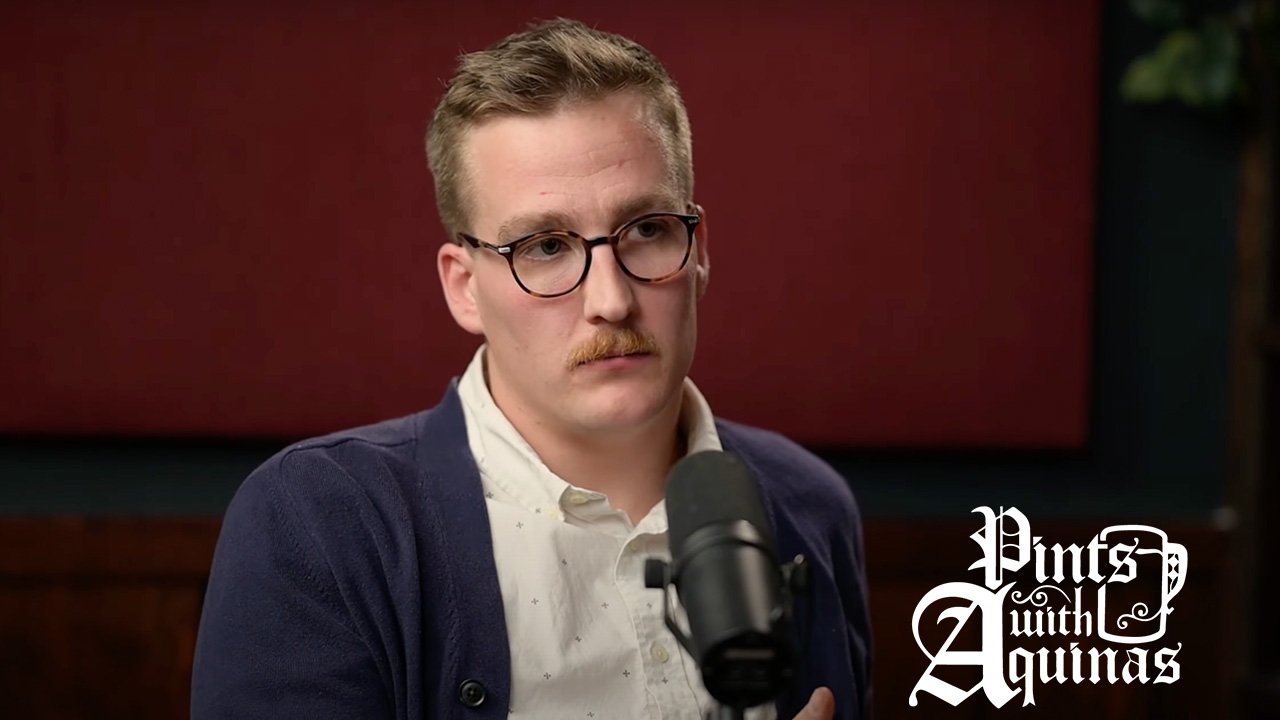
Marc Barnes is the editor of New Polity magazine, a professor at The College of St. Joseph the Worker, and the president of the Harmonium Project, a nonprofit dedicated to urban revitalization and transformation in Steubenville, Ohio. Marc has written on a number of topics—on gender and family, the Christian approach to money and the stock market, the Christian response to AI, among many others. His book What Children Are For is forthcoming from New Polity Press.
Alex Plato is a Professor at the College of St. Joseph the Worker in Steubenville, Ohio. Plato received a Bachelor of Science in Interdisciplinary Studies summa cum laude from Corban University (then Western Baptist College) in 2002. His interdisciplinary studies included several areas of concentration: music, theology, philosophy, literature, and education. In 2007, he earned a Master of Arts summa cum laude in the Philosophy of Religion and Ethics from Biola University’s Talbot School of Theology. In December of 2014, at Saint Louis University, he defended, with highest distinction, his dissertation “Anscombe on Double Effect and Absolutism: An Inquiry into Modern Moral Philosophy and Traditional Morality.” His work was directed by Dr. Gregory Beabout.
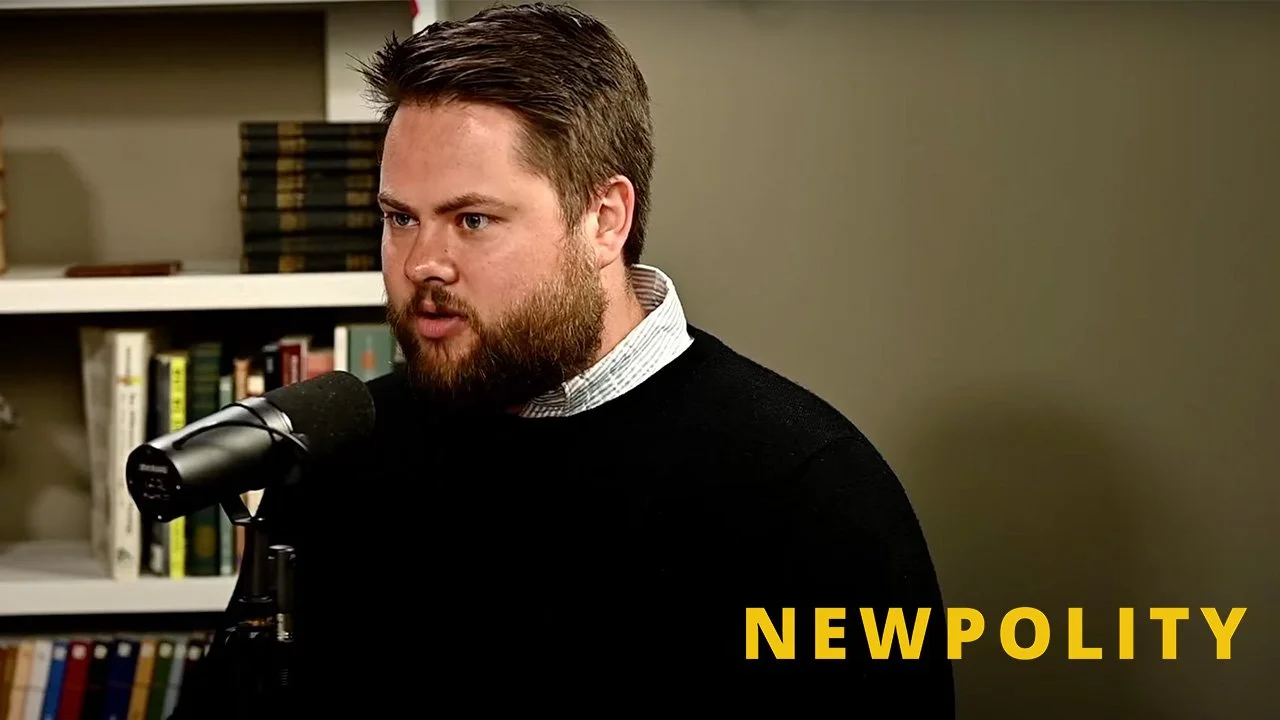
Alex Denley is a research fellow with New Polity. He holds a Master in Theological Science degree from Franciscan University of Steubenville. He is the co-author, along with Andrew Willard Jones, of a forthcoming book on the principles of Catholic Social Teaching, and has written essays and reviews in New Polity and The Review of Metaphysics. He was the co-host of the series “The Politics of Paganism” and is the media producer of New Polity Podcast.

Michael Boland is the executive director of New Polity. He has completed a Master's in Theological Studies and PhD coursework at the Pontifical John Paul II Institute; he is a current PhD candidate writing a dissertation under the direction of D.C. Schindler on the political theology of Henri de Lubac. He has taught undergraduate courses primarily in the areas of moral theology and 20th century theology. He has published in New Polity and presented academic papers for conferences hosted by the University of Dallas, the American Catholic Philosophical Association, and the Sacra Doctrina Project.
Masterclass Outline and Syllabus
Format
Each day includes three talks, two breakout sessions, and a closing panel with the speakers from the day. The talks will include the essential topics of Catholic Social Teaching given by our speakers, and will include time for questions. The breakout sessions will include small-group time with the presenters. Participants will be divided into small-groups with one of the day’s lecturers, to allow time for discussion, address your questions, and provide insight into how to apply the principles of Catholic Social Teaching to your particular situation. On the final day, we will have a CST Workshop that will bring together the lectures into how to take practical steps to applying CST to your work, business, family-life, and vocation.
Monday - Introduction to Catholic Social Teaching
Includes Intro to CST 1–3. Topics covered: A cosmic vision of power and relationships, man as essentially social; against individualism and collectivism; friendship, hierarchy and vocation; the common good, the meaning of justice, solidarity and self-gift; subsidiarity and virtue against “The State”; ideologies of liberalism, socialism, and nationalism in Catholic social teaching
Readings
Selections from Pope Leo XIII, Rerum Novarum; Pope John Paul II, Centesimus Annus.
Tuesday - Politics
Includes Politics 1–3. Topics covered: Philosophy, Law, and sin; Liberal individualistic freedom vs. Christian freedom as a social structure; The Spiritual and Temporal Powers; Post-Modernity and the Return of Pagan Tyranny; Politics in a post-Christian Society.
Readings
Selections from Pope John XXIII, Pacem in Terris; Pope Benedict XVI, Caritas in Veritate; Compendium of Catholic Social Doctrine.
Optional: Andrew Willard Jones, “The Priority of Peace and the Problem of Power.”
Wednesday - Economics
Includes Economics 1–3. Topics covered: Ideology and Property; Capitalism and the Universal Destination of all Goods; the Preferential Option for the Poor; Integral Human Development; the Just Wage; Globalization; Technocracy.
Readings
Selection from Pope John Paul II, Laborem Exercens
Optional: Marc Barnes and Jacob Imam, “Should Christians Invest in the Stock Market”. Andrew Willard Jones, “Capitalism Produces Socialism.”
Thursday - Family
Includes Family 1–2. Topics covered: Family as the basic pattern of society; scaling up the fractal pattern; Abortion as apotheosis of the Unjust society; Contraception and Natural Family Planning; Gender and the relation of man and woman; In vitro fertilization; the nature of the Marital union.
Readings
Selections from Pope Paul VI, Humane Vitae; Pope John Paul II, Evangelium Vitae.
Optional: Marc Barnes, “Abortion and the Reformation of Male Strength.”
CST Workshop
On Thursday, we aim to answer the question: “How does CST affect my vocation?” We will begin with a final breakout session, and then have all participants together for questions regarding the talks, particular problems that you have, and charting a way to integrate CST into your work, business, and family life.
Schedule
Schedule Subject to Change
Locations
Talks: College of St. Joseph the Worker Academic Building; 200 N 4th St, Steubenville, OH 43952
Mass Location: St. Peter Catholic Church; 425 N 4th St; Steubenville, OH 43952
Thursday Night Closing Dinner: The Grocery Box; 173 N 4th St, Steubenville, OH 43953
Monday, June 21
| Morning Prayer | 8:45a-9:00a | |
| Lecture | 9.00a-10.00a | Intro to CST 1: Social Doctrine |
| Lecture | 10.15p–11.15p | Intro to CST 2: The Social Encyclical Tradition |
| Breakout Session | 11.30p-12.00p | |
| Lunch | 12.00-1:30p | |
| Breakout Session | 1.30-2.00p | |
| Lecture | 2.15p–3.45p | Intro to CST 3: The New Evangelization |
| Panel | 4.00p-4.45p | |
| Evening Prayer | 4:45p-5:00p |
| Morning Prayer | 8:45a-9:00a | |
| Lecture | 9.00a-10.00a | Politics 1: The Common Good |
| Lecture | 10.15p–11.15p | Politics 2: Power |
| Breakout Session | 11.30p-12.00p | |
| Lunch | 12.00-1:30p | |
| Breakout Session | 1.30-2.00p | |
| Lecture | 2.15p–3.45p | Politics 3: Hierarchy |
| Panel | 4.00p-4.45p | |
| Evening Prayer | 4:45p-5:00p |
| Morning Prayer | 8:45a-9:00a | |
| Lecture | 9.00a-10.00a | Economy 1: Money |
| Lecture | 10.15p–11.15p | Economy 2: Labor and Property |
| Breakout Session | 11.30p-12.00p | |
| Lunch | 12.00-1:30p | |
| Breakout Session | 1.30-2.00p | |
| Lecture | 2.15p–3.45p | Economy 3: Christain Economy and Solidarity |
| Panel | 4.00p-4.45p | |
| Evening Prayer | 4:45p-5:00p |
| Morning Prayer | 8:45a-9:00a | |
| Lecture | 9.00a-10.00a | Family 1: Christian Marriage |
| Lecture | 10.15a-11.15a | Family 2: The Culture of Death |
| Breakout Session | 11.30p–12.00p | |
| Lunch | 12.00-1:30p | |
| CST Workshop | 1.30p–4.30p | All Participants |
| Evening Prayer | 4:45p-5:00p | |
| Closing Reception | 6.00p–9.00p |


