
The Politics of Gender
Latest
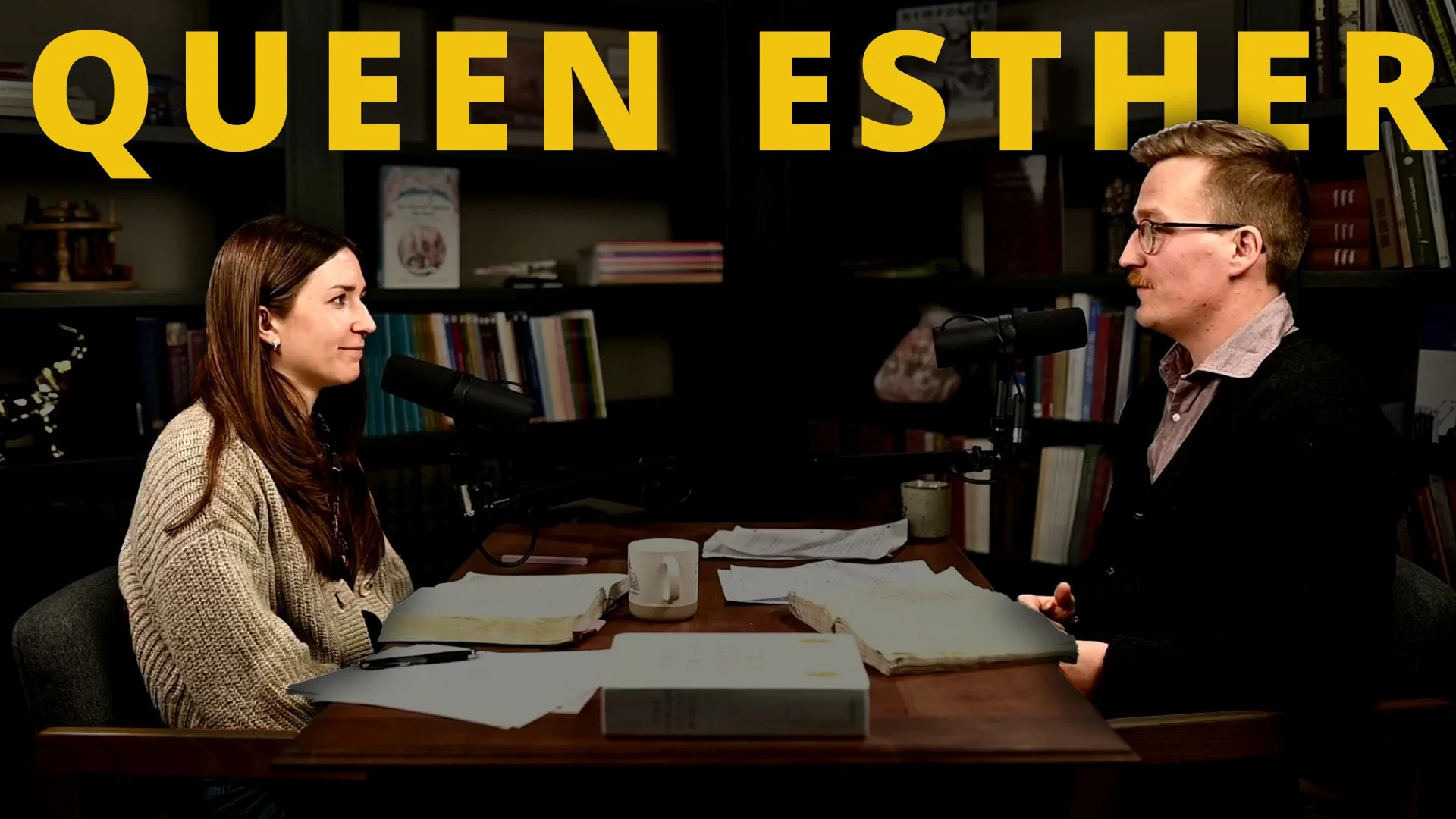
What do the matriarchs of the Old Testament teach us regarding the roles of men and women? In this podcast, Marc Barnes and Maria Brandell discuss the biblical story of Esther and how it reveals the specific vocation of women.

Gender season 2 has come to a close. Marc Barnes and Maria Brandell answer your questions and discuss the second season of Gender.

Marc and Maria discuss how the Third-Person perspective of pornography changes the way we view sexual difference.

Marc and Maria continue their conversation on Humanae Vitae; specifically on the desire to control the body and its reproduction through abortion. They discuss how abortion not only plays the function of the killing of innocent children, but reshapes the experience of the body as such.

Maria and Marc read Humanae Vitae, the Catholic Church's decisive rejection of contraception, as a text which prophesies and makes sense out of the meaninglessness we ascribe to our male and female bodies today.

Everywhere is beige. The same beige houses, the same big box department stores, even the exact same food is served everywhere all across the country. What has this monotone sameness done to produce our cultural moment - one that seems to glorify diversity on the one hand, but ship it out en masse with the other? Join Marc Barnes and Maria Brandell as they explore our desaturated modern world and why we look to gender for the way out.

We don't know what to do with consecrated virginity. The only way we can think of it as a disembodied spiritual calling; or as a fairly strange alternative to what is normal, marriage. Marc and Maria describe how Protestantism (and, in particular, Luther) denied the purpose of the virgin.

Modern economics takes the wage for granted, but during the feudal era, working for a wage was considered a sign of poverty. What changed? And how did this shift in economics shift gender roles? Join Marc Barnes and Maria Brandell as they discuss how capitalism rewrote our modern conception of gender.

Welcome to the Politics of Gender Season 2! Gender remains a hotly contested issue: gender constructionists and biological reductionists in an all out warfare. But, Marc Barnes and Maria Brandell argue that the Church can surpass these debates, and provide a way of understanding one's sex beyond imposed identities or brute facts.

Marc Barnes and Maria Brandell discuss the continuity of our current transgender moment with the pattern of origin stories found in the ancient myths—and how the Genesis narrative serves as a polemic against the anthropology of primal androgyny.
This is the end of Gender—Ivan Illich's book, that is. Join as Marc Barnes and Maria Brandell wrap up with Illich's best chapter yet, including a critique of capitalism and how to build a gendered world.
Holy Spime blocks! Today, Marc Barnes and Maria Brandell venture further into Illich's gendered domains, exploring an older world of gendered tools and spaces, and musing on how these worlds manifest (or don't) today.
Are today's traditional gender roles really traditional? In this episode, Marc Barnes and Maria Brandell discuss Illich's description of the gendered world of pre-modernity and why stay-at-home moms are as lonely as ever.
The regime of sex, the reign of gender, a cynical take on capitalism and sexism, and shadow work of the 1950's house wife's... join in for all this and more as Marc Barnes and Maria Brandell discuss chapters 1 & 2 of Ivan Illich's provocative text, "Gender."
Blessed Easter to you! No long podcast in honor of this great solemnity, but we'd like to invite you to join our second "Politics of Gender Book Club." Follow along by reading the first three chapters of "Gender" by Ivan Illich.
Thomas doesn't comment on modern gender theory—directly. But in this podcast, Marc Barnes and Maria Brandell explore how Thomas' notion of "human law" (combined with the brilliant insight of Ivan Illych on modern gender) help us grasp how our primordial task to image God as creative "world-builders" manifests the realm of gender.
Marc Barnes and Maria Brandell return for more gender trouble—but this time, gender trouble for the liberal project. The goal is to make all genders equal and free before the law, so we begin with liberalism’s first task: the creation of an equal legal definition.
Queer theory is all about the search for one's authentic sexual identity and the freedom to express it—or is it? Marc Barnes and Maria Brandell discuss the conclusions of Butler's queer theory and the ultimate aim of its political project.
Whoever controls the narrative, controls the truth. So can "constructing a new narrative" actually liberate oppressed identities? Marc Barnes and Maria Brandell explore the Butlerian critique of gender structuralists to find out.
Gender is a social construct. And so is sex. And so is everything else. Maria Brandell and Marc Barnes finish the first chapter of Judith Butler's Gender Trouble and try to show the difference between academic postmodernism and the naive identity politics of popular transgender and queer identity construction.
Feminism can't figure out what women are, at least not without excluding someone. Marc Barnes and Maria Brandell explicate Judith Butler's troubling of feminism in the second part of their book club on Gender Trouble.
Join Marc Barnes and Maria Brandell's book club on Judith Butler's queer theory classic, "Gender Trouble." Part I features a look into the text's backdrop, postmodernism—and its unexpected confirmation of Catholic doctrine.
Marc Barnes and Maria Brandell discuss how their dissatisfaction with both sides of the gender debate led them to take a closer look at the Catholic theological tradition.
Start Here!
Get the Magazine
New Polity Magazine aims to deconstruct the keywords and categories of liberalism and reconstruct them according to the logic of Christianity. Get the latest issue and access to our archives.
Esther defeats the idolatrous god-king through the strange power of weakness. Join Marc and Maria’s discussion of monolithic and idolatrous power structures and their vulnerability to the particular vocation of women.